Tuesday, March 22, 2011

Budapest & Prague: Two birds of a feather...

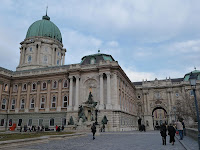
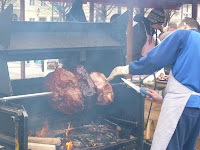
I guess they are neighboring countries, so one shouldn't be surprised there are so many similarities, but Budapest and Prague are a couple of real Twin Cities. I will try to run down a list of the numerous similarities, as well as note a couple of the differences I noticed. (Budapest pics are on the left and those of Prague are on the right.)

*Both are cut into two by a river: The Danube in Budapest and the Vltava in Prague.


*Both have prominent castles: Aptly, and respectively, named the Buda and Prague Castles.


*Both towns have beautiful cathedrals.


*Both are known for curative waters. Budapest is well known for its many public baths. We visited the The Széchenyi Spa in Budapest, the largest and most magnificent of them. For about $15 we spent the day going from outdoor baths, to saunas, to indoor baths, all of varying temperatures. It was quite the relaxing experience. Alternatively, just outside of Prague are the Carlsbad Mineral Springs, also known for the curative properties of its waters. Sadly, we did not make the trip.


*Both have famous bridges: In Budapest you have the Chain Bridge and in Prague the Charles Bridge.


*Both have lots of grafitti. Although the Lennon Wall in Prague is a sanctioned place for taggers, it is grafitti nonetheless. This picture in Budapest is also an impressive part of street art, although illegal.


*Both have a place for couples to lock up their love.


*Prague and Budapest were both former Communist towns which have since fully embraced capitalism.

*Both of the old cities have Jewish Quarters and, as such, were occupied by Nazi forces during the Second World War.


*Public transport is very well organized, and tourist friendly, in both cities, complete with buses, trams and metros.


*Tasty and hearty cuisine is not in short supply in either of the towns.


*Both towns are VERY touristy!


Despite all of the similarities, there were a FEW differences...

In Budapest...
*You can enjoy a VERY inexpensive cultural performance, thanks to government subsidies. We checked out Don Pascuale at the National Opera House. Our box seats, right next to the Presidential Box, ran about $9/piece. And, the cheap seats are about $2!
*There is a stunning National Parliament Building.

In Prague...
*You can check out the quirky Zodiac Clock, complete with hourly appearances by the 12 apostles.
*There is a TV tower with barcode babies scaling the sides.
*One can enjoy a glass of beer brewed at the monastery.
*You can visit a church adorned with HUMAN bones (a little ways outside of the city).
*Someone tried, unsuccessfully, to break into our hotel room! (The cops later broke the door down so we could make sure nothing was stolen.)

Monday, March 14, 2011

Sarajevo in Pictures...

This bridge, known today as the Latin Bridge, was where a very important event occurred, which led to the beginning of World War I. It was here, on June 28, 1914, that Franz Ferdinand, heir to the Austro-Hungarian throne, was assassinated. This is Skender, our guide during a day trip retracing the siege of Sarajevo by Serbian troops. During the mid-90's conflict he was just a boy and his father became part of makeshift military forces while his mother kept Skender safe at home. He recounted those days with us in chilling detail, stating that heat, water and even food were often in short supply. Only on rare occasions, when the air-raid sirens fell silent for an extended period of time, did he get to play outside with his friends...for a short time.

Looking down at Sniper Alley from a hill above Sarajevo. This is an important crossroads that was constantly in the scope of snipers during the mid-90s siege. Hundreds of civilians were killed while merely walking to across this street, in search of food.
One of the few buildings not yet rebuilt since the devastation caused nearly 20 years ago. The large bricks on the right filled the hole of a mortar round, but hundreds of holes from small arms fire remain.

This tunnel once spanned more than 800 meters, below the Sarajevo Airport runway, and was the only connection to the outside world for thousands of residents of Sarajevo during the siege. Food, arms and other goods were carried, day and night, by hand and in carts in this dark and damp tunnel, saving untold lives. Prior to its construction people were forced to run across the runway and were often hit by sniper fire when doing so.


One of many "Sarajevo Roses" found throughout the city. These are scars in the concrete created by deadly mortar rounds during the mid-90s conflict. They were later filled with red resin, so that the victims may never be forgotten.
One of two memorials for the victims of two separate massacres at the Markale Market in Sarajevo. During the two shellings, more than 100 civilians, waiting in line for food, were killed while hundreds more were seriously injured and maimed. The second shelling led to NATO involvement in the conflict. In the reflection you can see that the market is back to business-as-usual today.
A couple of old-timers passing a cool Sunday afternoon with a little larger-than-life Chess.
The beautiful Old Bridge in Mostar, Bosnia, which was the site of intense destruction between 1992 and 1993. Shelling destroyed a Franciscan and Serbian Orthodox Monasteries, as well as a Catholic Cathedral and many other monuments.


Friday, March 4, 2011

Serbia Haiku

Belgrade cold and snow

The hostel warm but stinky

Smoky restaurants

Two days is plenty

Military Museum

Relief from the cold

Pedestrian street

Cobblestone and boutique stores

Snow and wind are fierce

Internet cafe

Man shamelessly watches porn

My headphones don't work


Cafes have good food

But they are filled with smokers

Waiters speak English


Someone stole our juice

From the community fridge

Karma is a bitch!

S-O-F-I-A B-U-L-G-A-R-I-A

Six-hour walking tour. What better way to get acquainted with the Bulgarian capitol city than by foot. In temperatures hovering around freezing we strolled by the Presidential offices, the statue of Saint Sophia, old guys peddling communist-era antiques on the street and myriad other sites. It is a beautiful city, and very walkable, but when it is so cold it should probably be broken up into a two-day affair.

One leva tea at McDonald's. Given the fact that we have gone from a hot African summer to the cold Balkan winter in a matter of weeks, the temps are a bit jolting, even for a couple of weather-worn Minnesotans. As such, it is great to be able to duck into the familiar Golden Arches for some hot tea, a place to warm up and a clean bathroom...all for less than a buck.

Fairly priced, tasty, food. It isn't Buenos Aires, but the food in Sofia is pretty darn good, and definitely cheaper than most places with similar fare. Besides an amazing home-cooked vegetarian meal, we also enjoyed delightful pastas, soups, pizzas and pastries while on the town.

Impromptu cultural performance. After the aforementioned homemade meal our Couchsurfing hosts and their friend ducked out of the kitchen, threw on some traditional garb and entertained Heidi and I with instruments, singing and dance of their heritage.

Affable Hosts from Couchsurfing. I continue to be amazed by the hospitality of people on Couchsurfing and Niki and Eli were no exception. They invited us into their home, made us feel very welcome, and treated us to a number of meals. They went above and beyond with the cultural performance, drive to the mountain and paying for our final meal in Sofia before it was even served (in order to avoid our protests).


Bus-riding scofflaw. On Sofia public transport you are required to have a validated ticket, which is purchased before boarding and validated by an archaic hole-punch-like device on the bus. While removing my ticket from the punch it ripped. Minutes later two ladies boarded to make sure nobody was trying to cheat the system. Well, they either didn't buy, or didn't care for, my story (and I'm sure the language barrier didn't help). So, I had to shell out a 10 leva fine right then and there.

Unpleasant Pumpkin. While in Ukraine I had tasted some warm baked pumpkin, skin on with brown sugar. It was delightful. While on our walk I spied something similar, on the street, which roughly translated to "sweet pumpkin" from the cyrillic words I recognized. Heidi wanted a chunk so we bought it and gave it a try. Disgusting! Not only was it not sweet but ice cold. The picture says it all...

Lovely mountain hike. Our Couchsurfing hosts drove us up to the Vitosha Mountains, which are just on the outskirts of the bustling city. After a short drive we got out and had a nice hike in the alpine setting. The trail was a bit slick, from all of the other hikers compacting the snow, but the sun was shining and the scenery beautiful. By the time we turned around to head back down we were all warm and removing some of our layers.

Great street exchange rates. Twice during our walk through Sofia, some guy approached us with a fishy story about being from the Czech Republic and wanting to buy foreign currency at a great rate...much better than that being offered by the legitimate outlets. I know it was a scam and figured he was handling counterfeit notes. I refused his offer, first politely and later more sternly. When I relayed the experience to a hostel employee I learned that the scam was giving foreigners old leva, which are now worthless. Sadly, I was told, others weren't so keen and fell for the scam.

A long wait for the police. On our way down Vitosha Mountain the tires on our hosts' little Mitsubishi lost traction on a curve and we had a low impact crash into a vehicle heading in the opposite direction. Luckily, nobody was hurt but we did have to wait for police to come and fill out a report. By the time we left, more than two hours later, we were all thoroughly chilled to the bone.

Rila Monastery. Originally built in the 10th century, this beautiful monastic residence is tucked away in the Rila Mountains, more than two hours from Sofia. It was built by the students of St. Ivan of Rila who lived in a nearby cave, with no possessions, for many years. The church has numerous vivid depictions of the book of Revelations. The setting is serene and breathtaking.

In search of a skating rink. Heidi and I had hoped to complete our day-tour of Sofia with a nice time on the outdoor skating rink in a park on the outskirts of the city center. We found the park easily enough, but we had no idea that the park was so huge. By the time we found the sheet of ice, more than an hour later, we were cold, miserable and in no mood to skate.

Alexander Nevsky Cathedral. Planned exactly 100 years (to the day) before my birth, this is one of the largest Eastern Orthodox churches in the world, with the capacity to hold 10,000 people inside. It is adorned with beautiful murals and an impressive iconostasis (which we weren't allowed to photograph).

Wednesday, March 2, 2011

Istanbul: Where Asia Meets Europe (Literally)

Tourist Sites

Istanbul is, if nothing else, a Mecca of tourist sites. And, it really is no wonder. Divided between Asia and Europe the city is truly a cultural crossroads, and has played home to many different ethnic group and religions.

The Sultan Ahmed Mosque (aka The Blue Mosque).
Built at the beginning of the 17th century, this enormous edifice is still a functioning mosque, although it is overrun with shoeless tourists much of the day. It is popularly known as The Blue Mosque due to the beautiful tiles on which line the interior walls. It is only a stone's throw from Hagia Sofia.

Hagia Sophia. Dedicated in AD 360 this impressive structure as served as served as both an
Orthodox and Roman Catholic Cathedral, as well as a mosque. Today it is open to the public as a museum and for 20 New Turkish Lira you, too, can marvel at its wonder. When the place was converted to a mosque the old Orthodox mosaics were only plastered over, and not destroyed. As such, a number of them have been uncovered and are visible again today. Some of the enormous interior pillars are now crooked, but large exterior buttresses support the weight enough that the entire joint doesn't collapse.

Topkapı Palace.
Completed in the mid-15th century, this enormous palace served as the primary residence of the Ottoman Sultans for nearly four decades...and it comes with all of the distractions necessary to keep him occupied: a royal harem, relics of many Muslim prophets, and the keys (and rain spouts) from the Kaaba, the most sacred site in Islam.
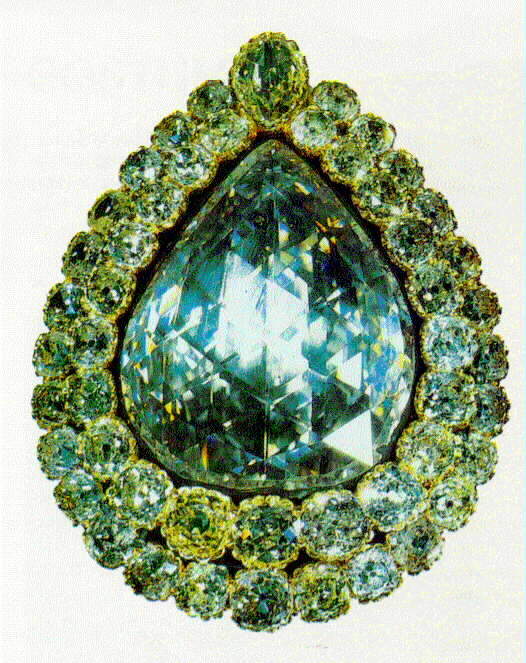
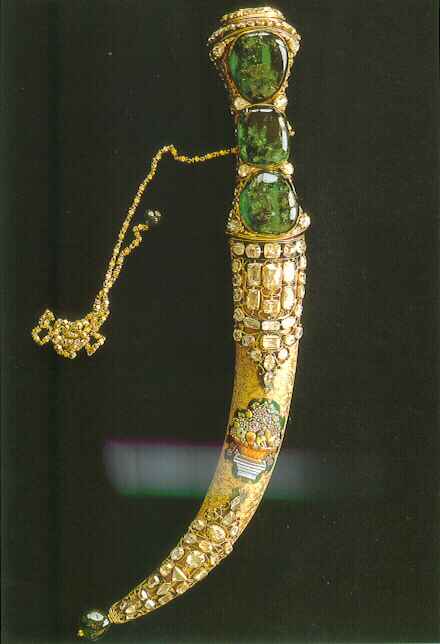
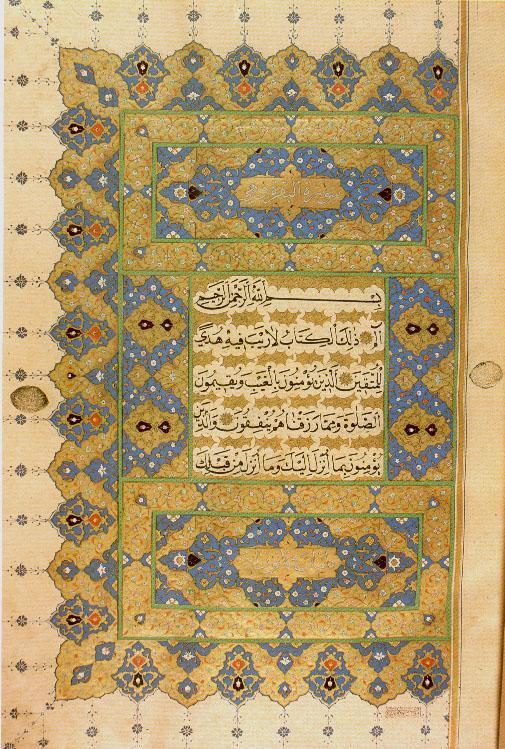
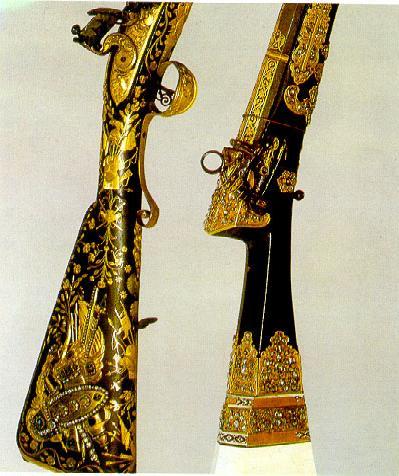
The treasury shows off the richest of the royal booty, including the Spoonmaker's Diamond (which was recovered from a trash heap), the Topkapi Dagger, illuminated pages of the Koran and some intricately designed, and extremely ornate, flintlock weapons. And the aspiring Ottoman prince can head on over to the circumcision room for the ancient rite of passage. (You have no idea how grateful I am that this is performed shortly after birth.)

Istiklal & Galip Dede.
It is said that these two famous Istanbul streets see more than 3 million visitors on a given weekend day, and it's no wonder. The former is a huge pedestrian mall lined with familiar retail shops, as well as cute local boutiques. Dede is a narrow extension thereof and is full of little shops filled with stringed instruments, including violins, mandolins and the obligatory guitars. Also, one can find some souvenir items, including beautiful lights or hand-decorated plates, all without the hassle of the Grand Bazaar.

Grand Bazaar. The Grand Bazaar is one of the largest, and oldest, covered bazaars in the world. Spanning 58 streets and more than 4,000 shops, it is quite an impressive place. Sadly, it is also home to a number of rather persistent, if not downright pushy, salespeople. As such, Heidi and I cruised through this tourist trap, taking little time to admire the lamps, rugs, tea sets, jewelry and Turkish Delight for sale.

Cuisine.

If you come to Turkey expecting to get cheap eats, think again. Sure, it can be done, but this a place where the people take great pride in their food.
As our hotel was situated in the shadow of the Hagia Sophia, most of the nearby restaurants catered to foreigners, with waiters speaking a respectable amount of English, Russian, Spanish, Turkish and, no doubt, even some Japanese and German too. One night we got our grub in a place where there were five tables occupied by people from five different countries, none of which was Turkey.

The food itself is colorful and tasty. From spinach
dishes to kebabs, Turkish pides to traditional döner sandwiches, not to mention lentil soup and pomegranate juice, the Turks take their cuisine seriously and know how to whip up a good meal. Add some apple tea in a traditional glass, or even some salep and you've got the perfect excuse to sit around the table with great company for a little longer than necessary. Top it off with some baklava or freshly made Turkish Delight and you're in Heaven!


Cultural Experiences.

For my birthday, I made Heidi try out two things she might not otherwise be terribly enthusiastic about: hit up a Turkish Bath and have some nargile. Like I always say, when in Rome...

Turkish Bath. I picked a hamam on the Asian side of Istanbul for a few reasons. First, I thought it would be cheaper, less touristy (and, thus, more authentic) and it gave us an excuse to cross the Bosphorus and go into Asia, as the continent wasn't really a part of our itinerary otherwise. Heidi and I entered the Azizye Hamam through the gender-specific entrances, agreeing to meet back in about 90 minutes.

I walked in to a common room with a bunch of men sitting around, all wrapped in
peştemals, a traditional wrap with a plaid pattern. I was immediately identified as a foreigner and directed, via hand signals (as English was not spoken there), to a small room with a bed where I disrobed and put on my peştemal. When I emerged my tellak (masseur) directed me to a room with marble floors, walls lined with wash basins and a raised and tiled platform in the center of the room, known as the belly stone. I was instructed to lie down on said stone, but it was too hot to the touch and had to wait for my tellak to return with another piece of cloth to serve as a barrier between the scorching stone and delicate dermis, as another guy chuckled at my reaction. After some time my guy returned and motioned for me to follow him.

We entered another room, where a large naked man with soap suds covering his entire frame was being scrubbed down by another tellak. I sat down and my manservant lathered me up, thankfully avoiding the area covered by my cloth (showing respect and awareness of my foreign modesty). After I was all full of suds, I got a quick massage and was rinsed off. Next he put on a rough mitt and forcefully scrubbed my skin, dead chunks balling up everywhere. Another rinse, more soap (this time getting dangerously close to the "inner sanctum") and a final rinse. I followed that up with some alone time in a steamy sauna, showered off and returned to my one-bed room, where another guy (the yanaşma) toweled me off and wrapped a second around my head. I got dressed, had some tea, paid up, and was on my way, leaving with some very soft skin.

Nargile. This is, basically, a big water pipe with flavored tobacco in a bowl, which is topped with very hot coals. As the user draws from the pipe the smoke is cooled by the water and inhaled. As it was my 32nd birthday, I convinced Heidi to give it a go too. When in Rome and all...

I chose apple flavor fro a wide assortment of choices. It was smooth and tasty. Heidi tried it, didn't gag, and pondered the point of the entire exercise. We played Checkers and, after a few more puffs, both became slightly light-headed. As the coals grew cold a man came around and changed them out with hot red ones. The thing seemed to burn endlessly. Then, our heads began to ache, no doubt from the smoke, mine slightly and hers pounding. She took the rubber match in Checkers and we left for fresh air and ibuprofen.

USA Day. Being on the road so long, it is nice to take the occasional day to enjoy the creature comforts of home. So, we took a day off from the standard sightseeing and strolled through a Western mall, grubbed at the fanciest Pizza Hut I have ever seen and took in The Fighter (a pretty good flick) at the theater. We topped the day off by picking up the final installment of the Harry Potter series, of which Heidi has read the other six, while I have only sampled the penultimate novel. It was a nice escape from, what can be, a grueling travel schedule.


Tuesday, February 22, 2011

Greece: Doggies and Ouzo and Feta...Oh My!

After making it through Immigration with no troubles Heidi and I headed out of the airport, in search of some public transportation into the center of Athens, where we had booked an inexpensive hotel for a few days. We hiked over to the Metro (aka subway) station only to be greeted with signs stating that a strike had shut down the rail system. So, we walked over to the bus station, where we could take an express bus to whisk us into town...or not. The drivers were also on strike! Apparently the city is, of late, frequently crippled by these work stoppages, as labourers protest paycuts in the midst of the country's ongoıng financial crisis. As such, our only option was to take a cab into town, to the tune of about $50. (Given that gas is going for more than $8/gallon I guess it was a fair price.)

Upon arriving at our hotel we were greeted by a friendly receptionist who spoke no English. That conundrum was quickly remedied, however, when she called an English-
speaking member of the staff on the phone. That gal proceeded to talk my ear off for about 15 minutes. Our room was a simple thing with a recently remodeled bathroom, TV and fridge. It was the first of two places we stayed in Greece that had a nifty little contraption to save energy. The outlets and lights in the room only worked once the key fob was placed in a little socket in the wall. Pretty cool little gadget!

Having been robbed (which I may have mentioned one or twelve times previously), and coming from Africa, we were lacking the proper attire to deal with the cooler winter climate. Luckily we found a second-hand shop on our first night there and each picked up a couple of decent used sweaters.

The next day we were walking through the chilly rain, en route to the Acropolis, when we came across an REI-like store called Polo. Initially, we popped in to the place just to get out of the rain but ended up wakling out of the joint with new rain jackets, thermal tops & bottoms, and
fleece hats, gloves and scarves. Given the amount of stuff we got I was pretty pleased that it only cost €130, everything being discounted by 25%. The timing could not have been more fortuitous and we put the stuff to use almost immediately.

Despite our groovy new gear the driving rain was still plenty cold and uninviting (but, luckily, we were staying dry). As we were within the shadow of the Acropolis a man popped out of a cafe and invited us in for a warm drink. That was all Heidi needed and before I could ask her opinion she was inside, removing her layers and warming up by the fireplace. We were the only customers in the place and enjoyed some (overpriced) hot chocolate and baklava next to the crackling fire. As it was still raining when we left we decided to forego the Parthenon for the day, instead opting for the (indoor) Acropolis Museum, where many of the artifacts from the ancient city are now housed, including nearly one-third of the Parthenon frieze (the rest being scattered throughout museums around the world). It was a slick new museum, albeit not terribly spellbinding.

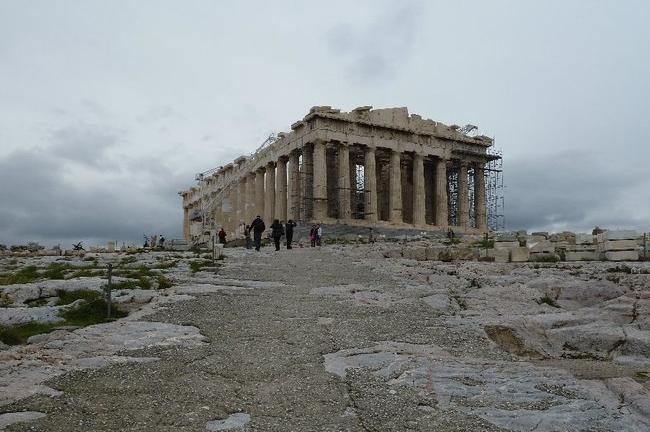
For €12 the Acropolis Ticket covers admission to Acropolis (where the Parthenon can be found) and a number of secondary archaeological sites, including the Temple of Zeus, Roman Agora, Ancient Agora, Hadrian's Library, the Theater of Dionysus and Kerameikos. Over two days we visited all of the sites, save for the last (which is the cemetery of ancient Athens) as we had become a bit ruin-weary by then. There we were, taking in the centuries-old remains of an ancient civilization and could think nothing other than: 'Ah, it's just another toppled column.' Given the time of year we didn't have to deal with huge crowds but my memories of the Parthenon will always be a bit marred by the scaffoldings surrounding it, as part of an ongoing restoration project.

We got up early Sunday morning to take a ferry to the Greek island of Santorini, where we would spend the remainder of our time in the country. We checked out just after 5am and walked to the main road, where we caught a cab to the nearest (operating) Metro station. (Taking the taxi directly to the port would have cost about an extra €20.) We bought our tickets and grabbed a bite to eat before boarding the giant Blue Star Ferry vessel Ithaki. This was a much more luxurious boat than that which we took to Zanzibar. There were multiple restaurants, a gift shop and plenty of room below for cars, motorcycles and semi-trucks. After being booted out of some higher class seats Heidi and I sat down at a table and passed the time by playing cards, reading and catching up on blogs.

Upon arrival in the port we were disappointed by the fact that our hostel didn't pick us up, as their website claimed. We hopped on the local bus and found our accommodation with the help of a few locals. The place got rave reviews online but we weren't impressed. First off, we were disturbed relatively early in the morning, two days in a row, by jackhammering from the floor above. Beyond that the room smelled like mold, the TV was janky and the staff wasn't all that helpful. So, despite the nice furnishings, we got the heck out of there as soon as our reservations expired.

As for the island itself, Santorini is a beautiful respite from the hustle and bustle of Athens. As it was the low winter season, a number of the shops and restaurants were shuttered and the streets weren't packed with foreigners, leaving us with a much more pleasant experience than I would expect during the summer.

We spent one afternoon with a walk to the neighboring village of Firostefani, where we enjoyed a nice afternoon picnic, complete with wine, cheese, bread, salami, oranges and olives, complimented wonderfully by my company and a great view of the volcano caldera. Later that night we hopped a bus for Oia, a village on the northern end of the island, known for its picturesque sunsets. We joined about a dozen other tourists who walked throughout the labyrinth of pedestrian alleyways, snapping photos along the way. As the sun went down the winds picked up dramatically and we bundled up accodingly.

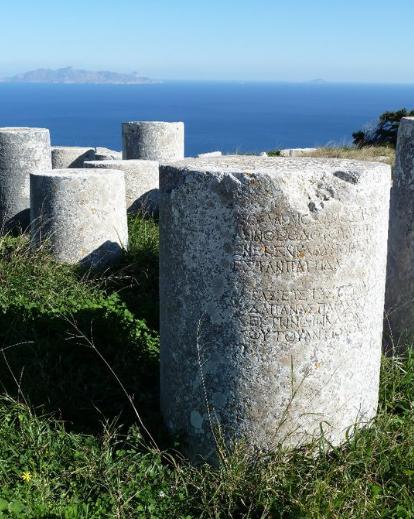
On another day we took a bus to the deserted beach town of Parissa (which is quite lively in the peak summer season) for a hike to Ancient Thira on top of Messavouno mountain. Along the entire journey we were accompanied by anywhere from 1-4 dogs. They were all friendly animals and seemed to have no motivation for following us, except that it was just a way to pass they day for them. The ruins themselves were impressive, if for no other reason than the fact that they are on top of a rather steep (albeit not terribly high) mountain. We walked back down the other side and bid our canine friends goodbye when the bus pulled up.

Santorini is also the home of the, rather cheesy, wine museum which was another necessary stop during our time there. The museum houses a number of corny displays tracing the history of Santorini wine making, dating back to 1660. Sadly, photos were not allowed (and our camera was held during the tour) so we weren't able to document the underground displays of donkeys with mechanized ears alongside mannequins dressed in period costume. The entire display was in an old undergound tunnel, once used for wine-making, which stretched 300 meters. The tour was capped off with the opportunity to try a red, white and nummy dessert wine.

Besides the sites the food really stole the show for Santorini. Everything was rich, flavourful...and, no doubt, fattening! We stuffed ourselves with excellent gyros (chicken and pork only, as lamb wasn't available), fried feta covered with honey and sesame seeds, stuffed grape leaves, lamb spaghetti, greek lasagna and lots of yogurt. We rounded out our Greek culinary experience by sampling a little bit of ouzo, the licorice-flavoured liquor preferred by island dwellers.


Friday, February 18, 2011

Tanzania and Zanzibar

(Note: Sorry about the lack of photos but this internet cafe in no good for uploading. If you wanna see the pics go to my Facebook album.)

Since we had already gone on a couple of safaris, and we were a bit road weary from, seemingly, constant travel, Heidi and I decided to spend all of our time in Tanzania on the island of Zanzibar, along with a few days in the capital city of Dar es Salaam. That being said, our Ukrainian friends from the train (in the previous blog) certainly made every attempt to convince us to accompany them to Ngorongoro Crater...most certainly for a better price rather our company. We politely declined the offer and, after a few days in Dar, purchased ferry tickets for the island. Prior to departıng the mainland we spent a couple of days in a shabby motel which was a bargaın, especially considering the almost necessary A/C in the heat of summer. Rooms were spartan with the exception of large flat-screen TVs, which had four channels broadcasting a mıx of Swahili news, dubbed over Phillipino soap operas and terrible musıc vıdeos.

Dar es Salaam is a chaotıc tangletown with numerous buildings under construction or renovation, although modern construction equipment is rarely used, with contractors, instead, opting for stick-built scaffoldings and hoards of cheap labourers. Meanwhile the streets are filled with bumper-to-bumper traffic, frustrated drivers honking their horns while scooters zoom through narrow spaces and pineapple salesmen negotiate their carts through the gridlock.

The large East-Afrıcan port city is ethnically diverse with a mix of African Christians, Muslims (of both African and Arabic descent) and Indians, with a spattering of whites and Asians as well. The muezzin singing the daily prayers can be heard in every corner of the city, from Mosque Street to United Natıons Road. Muslim women often walk the streets fully covered, with only their hands and eyes exposed, while other ladies don short skirts and heels. For great Indian food at fair prices one need only to wander down to Indian Street.

On our fırst day in town Heidi emerged from her shower in a slıght panic. Her eyeglasses, previously damaged by a mıschievious capuchin monkey ın Bolivia, had finally snapped at the bridge. We asked the friendly ladies at reception for directions to an optician, but instead they beckoned a security guard who took us over to a shoe repairman on the street. We bought some super glue, at his direction, and a crowd of men gathered, hemming and hawing, as the repairman glued the frames and held them steady. When he released his grip so did the glue. After a second attempt we were told that which Heıdı had known from the start: the glue wouldn't work. We hopped in a cab to an optician and, less than 30 minutes later, her old lenses were in new frames. We really were quite fortunate the glasses held until we made it to Dar, where frames are abundant and prices reasonable.

Our other tasks ın Dar were also rather mundane and included finding a bathıng suıt for Heidi and more anti-malarial medicatıon for both of us (as our original supply was pilfered and we only purchased a partial replacement in Zimbabwe). The latter task was completed rather effortlessly, with Heidi getting the daily Doxycyclene and myself opting for Mephaquin, a weekly medicine which is very spendy back home (and has been known to cause psychotic dreams and panic attacks in some people).

Despite a number of beaches, in and around the city, swimwear is not abundant in the House of Peace (the literal translation for Dar es Salaam). We hired a cab driver to assist us in our endeavor and he took us to a little boutique in a beachside hotel. They had about 8 suits to choose from, all of which were made for waifs or teenage girls! Next we stopped at a used clothing stand, where the suits were 'like new.' Besides being clearly worn, all of those seemed to be one-piece suits for Lane Bryant models. We found a third store, which was a boutique of African-inspired Italian clothes and they actually had a nice selection, not to mention a 50% off sale on all swimwear. Heidi ended up with a nice new two-piece for about $23. (I chose to just wear the shorts of my convertible travel pants for swimmıng.)

Upon our arrival in Dar we instructed our driver to take us to a well-known backpackers haunt called Jambo Inn. En route he called a colleague who met us there and convinced us to go to the aforementioned place (wıth A/C and charging the same price). This man, Norman, explained he also operated a tour company and could help us wıth our needs, if so desired. Being that he wasn't pushy, and seemed genuinely friendly, I contacted him before we took of for the island of Zanzibar.

Once Norman explained all of the tours available we made a list of the four we most desired: a tour of Prison Island, the obligatory Spice Tour, Swimming with the dolphins, and snorkelling off Mnemba Island, known for colorful fish and beautiful coral formations. For all four, including transportation, he quoted us $460. I explained that the price seemed high (after all, we are talking about Tanzania here) to which he replied, 'But this is a lot of activities.' After looking to Heidi, who merely shrugged, and asking this man if we could trust him, I agreed...having forgotten the advice given us by Josh in Zimbabwe (who lived in Tanzania most of his life): When a Tanzanian sees a white person they will, initially, quote a price about double what they'll accept, and from there a bargaining game wıll ensue. I, trustingly, gave him half of the money on the spot, so he could 'forward it on and begin making arrangements.'

After a rowdy two-hour ferry ride, with opposing soccer fans jeering one another with chants and vuvuzela horns (gearing up for the big evening match between Simba and Yanga) we arrived at the port of Stone Town. We disembarked into a sea of chaos, with porters everywhere, yelling soccer/football fans and people maneuvering wheeled luggage through the masses. As if entering another country, foreigners are required to fill out immigration documents and have their passports stamped. When we finally left the port we were greeted by Ali, Norman's Zanzibari colleague.

Following formalities, Ali walked us to our accommodation, the Princess Salme Inn. We hadn't made reservations but the place got good reviews online, so we chose it. Once we arrived we were shown a simple double and quoted a price of $35/night. Having thought it was cheaper online, and being on edge from being treated like an ATM for the past three months, I flipped out! 'You are trying to charge me mzungu prices,' I yelled at the young attendant, which he denied. I demanded to see a price list, which he said they didn't have. 'Then show me receipts for other customers,' I angrily ordered. The boy pulled out some receipts but flipped through them so quickly I couldn't study them, further convincing me I was being hoodwinked. I angrily proclaimed I'd be taking my business elsewhere. My tantrum raised the attention of the manager who greeted me and asked me what the problem was, to which I stated my case. She invited me to their computer where I could look up their rates online and show her what I saw. With Heidi, Alı, the manager and the young attendant looking over my shoulders, I clicked on their site and found the price: $35/night. Talk about feeling low! I apologized profusely for the next five minutes, all through the booking process and for days to come. Frankly, I was surprised they didn't ask me to leave after my tyrade. (The place ended up being absolutely great, with an amazing complimentary breakfast and wonderful staff. We even got an upgrade when we returned a couple weeks later.) Shortly thereafter the real shyster, Ali, collected the remainder of our balance for our four tours, having experienced none of them.

To my relief, the next morning our driver, Rashad, arrived at our hotel early to take us on our spice tour. We went to a small plantation and had two young men show us around, one giving the tour while his counterpart retrieved various spices and fruits. At the conclusion of the tour we were fed a bunch of incredibly fresh fruits, dressed up as the 'Spice King & Queen,' and hit up for tip money and to buy some locally grown spices. (I had already decided to tip our guides but was a bit perturbed when they said nobody paid them and they performed the service solely for tip money. If this was true, why was I paying so much for the tour? And, if not, I don't appreciate being deceived.)

We had a couple of hours for lunch before meeting up with Rashad, once again, for our tour of Prison Island. This was sold to us as a place where slaves were held (before being shipped around the world for sale), as well as a location to interact with giant tortoises. Turns out the place had no historical remnants of its history as a slave-holding location, nor did it ever serve as a prison. One was built but the British converted it to a quarantine station, given the importance of the nearby port and the risk of an epidemic. The building actually never served any purpose, save its current one as a tourist trap and hotel (and its not even the original). The tortoises, on the other hand, were quite spectacular.

The island houses a sanctuary for these colossal shelled creatures, which were once driven to the brink of extinction. Dozens of the Aldabra Giant Tortoises, of varying size, chill in relative comfort, free of predators and other dangers. Their ages are painted on their shells, the oldest of which was a hatchling during the American Civil War! As the turtles slowly walked towards us, competing for the lettuce leaves we held, their shells creaked unnaturally, as a joint without cartilage might. We also had the opportunity to pet their surprisingly long and leathery necks. It was a really cool experience and certainly the highlight of the unimpressive Prison Island.

We spent one more day in Stone Town, just wandering through the city of narrow twisting alleys, full of curio shops, papaasi (wannabe tour guides, although the literal translation of 'ticks' is often more appropriate) and calls of 'Karıbu,' the Swahili word for 'welcome.'

The night we ate at Forodhani Gardens, an open-air seafood extravaganza in a park along the Indian Ocean. I had raved to Heidi about this place ad nauseum, as I had experienced it on a trip to the island four years prior. Basically, dozens of cooks set up tables loaded with, primarily, seafood. The customers choose what they want and it's heated up on a nearby grill. Some other people offer the local take on pizza, fresh fruit or sugar cane juice. That night we had lobster, king fish, calamari, chipati bread, sweet banana and a vegetable samosa...all for about $14. Truth be told, the food wasn't all that great, and certainly not the incredibly fresh fare I have romanticised about from my previous visit. (Since then we've heard some people speculate that the fish might sit out on those tables much longer than I'd care to know!)

The following morning we took a minibus to Teddy's Place in Paje, a rather small German-run operation with 7 thatched bandas and a cute bar, all with white sand floors. It was a real relaxing place and only about 100 meters from the crystal-clear waters of the Indian Ocean. We had, initially, booked the place for 4 nights but ended up staying for 8 because of the price and atmosphere. While there we did lots of nothing, ate a bunch of amazingly fresh seafood from various joints along the beach, and took almost daily dips in the warm and inviting salt water. Our only excursion was to Kimikazi to swim with the dolphins.

Rashad picked us up at 7am and we were heading out in the boat less than an hour later. (Apparently, our sea-dwelling mammalian friends head out to deeper, and thus cooler, waters as the day progresses.) Our little boat, carrying Heidi, myself and two crew, joined about 8 others who tooled along in search of fins piercing the water's surface. Once we got close we'd don our snorkelling gear and our guides would order: 'This side! Jump now! Look down.' We'd hit the water and be just feet away from up to six dolphins at a time. We'd swim with them for a few seconds before they disappeared into the blue abyss deep below. At that point we'd climb into our respective vessels, only to do it all over again. All in all, we probably had about 8 jumps before we headed in to shallower waters for some mellow snorkelling. It was an exhilarating experience (which I didn't fully appreciate at the time) albeit a bit disheartening too. I only hope the dolphins, being pursued by an armada of tourists, view the daily ritual as a game rather than intrusive and harassing.

The entire island is an odd combination of juxtaposition and contradictions. Bikini-clad foreigners walk along the same beach as devout Muslim women, covered from head to toe in flowing robes and a hijab. At low tide these women are out farming seaweed (for use in expensive cosmetics), or burying coconut fibres (to be used for rope) earning around $1/day. As the tide rolls in foreigners rent expensive kite-surfing equipment and skim across the ocean, the seaweed plots only inches below. Muslim men tend bar at various resorts for Westerners who stumble to bed early the next morning, just as the muezzin is heard calling out morning prayer from the minarets which tower above all other structures in the village.

After a relaxing stay in Paje we headed to the northern part of the island and a village called Nungwi. From there we were to take a boat to Mnemba for some phenomenal snorkelling, the last of our (overpriced) pre-paid tours. We got a decent place, not far from the beach, for $35/night (thanks to a couple of travelers we met at Teddy's) after initially being quoted $10 more. That night we had, in my opinion, the best seafood of the trip: three large intact fish (tuna, Red Snapper and Dorado) were on a table along the beach. We pointed at what we wanted and, a while later, large grilled fillets were served to us as the tide rolled in, literally over our feet. I had the tuna and Heidi the Red Snapper.

Rough waters made navigating the ocean dangerous, so our snorkelling excursion was postponed and, a day later, canceled altogether. A boat sank not far from Nungwi and 18 people died when another capsized near the neighboring island. Ali said he'd refund us for the snorkelling...$60! Considering we paid $460 for four tours, and this was one of the most extensive, I was none too pleased, resolving to stay on Zanzibar an extra day, and involve the local authorities, if need be. We ended up getting $110 only minutes before boarding our ferry off the island (which I stıll felt was unfair but much better than nothing).

We had an extremely rough ferry ride back to the mainland. About an hour into it people were vacating their seats, instead lying on the floor, while others expelled their lunches into plastic shopping bags. Heidi and I were both a bit queezy but faired better than most, combatting the vacillating movements of the ship by focusing on a steady object off in the horizon.

We spent the next four days in Dar es Salaam, and watched as the tensions mounted in Cairo (our next destination) and protests grew larger with calls for the president to step down. After spending one night trying to convince Heidi it would all blow over, I finally realized she was right (and we ought to skip it) the following day. Brad LaNasa, our travel agent (who comes highly recommended) worked some magic and got us re-routed, skipping Egypt altogether and spending extra time in Greece, with a one-night layover in Doha, Qatar (which included a complimentary hotel, courtesy of Qatar Airways).